And Cain said unto the Lord, My punishment is greater than I can bear... Behold, thou hast driven me out this day from the face of the earth; and from thy face shall I be hid; and it shall come to pass, that everyone that findeth me shall slay me.” — Genesis 4:13–14
This immediately raises a paradox: If only Adam, Eve and Cain were alive at that moment, who could possibly “find” Cain and kill him?
This question implies a broader population other beings or humans outside Adam’s immediate family.
“Adam Was Not the First Man”
Having already noted that Genesis 1:26–27 describes a creation of “man in God’s image”, male and female before the narrative of Adam in Genesis 2.
This distinction is critical.
➤ Genesis 1 Humanity — Soulful Man
Created in the image and likeness of God, meaning spiritual and soul-based beings.
Told to “be fruitful and multiply and replenish the earth.”
This creation occurs before Eden and the physical formation of Adam.
➤ Genesis 2 Humanity — Earthly Man (Adam)
Formed “of the dust of the ground” — a material body.
Given breath (spirit) and a specific garden environment (Eden) to tend.
Thus, Genesis 1 could represent the creation of a broader race of soul-based or pre-Adamic humans, while Genesis 2–3 narrows the lens to one covenantal lineage (Adam and Eve) through whom the divine image would become embodied and conscious in material form.
Thoth, Lemuria, Atlantis and the Pre-Adamic Veil
In the crucible where myth, metaphysics, and mystery converge, the Emerald Tablet gleams like a shard of primordial light, etched, it is said, by the hand of Thoth, the Atlantean priest-king who became Hermes Trismegistus, thrice-great guardian of cosmic law. Could the Lemurian and Atlantean root-races of Theosophical lore be the very soulful pre-Adamites we have traced through the Gap, the fall of Lucifer, and the silence between Genesis 1:1 and 1:2? Let us walk the razor’s edge between esoteric tradition and scriptural metaphor, where Thoth stands as both witness and architect of a world before the flood of Noah and perhaps, before Adam’s breath.
The Tablet of Destiny: Thoth as Scribe of the First Age
“True, without falsehood, certain and most true: That which is below is like that which is above, and that which is above is like that which is below, to accomplish the miracles of one thing.” — Emerald Tablet of Hermes, Line 1 (Isaac Newton translation)
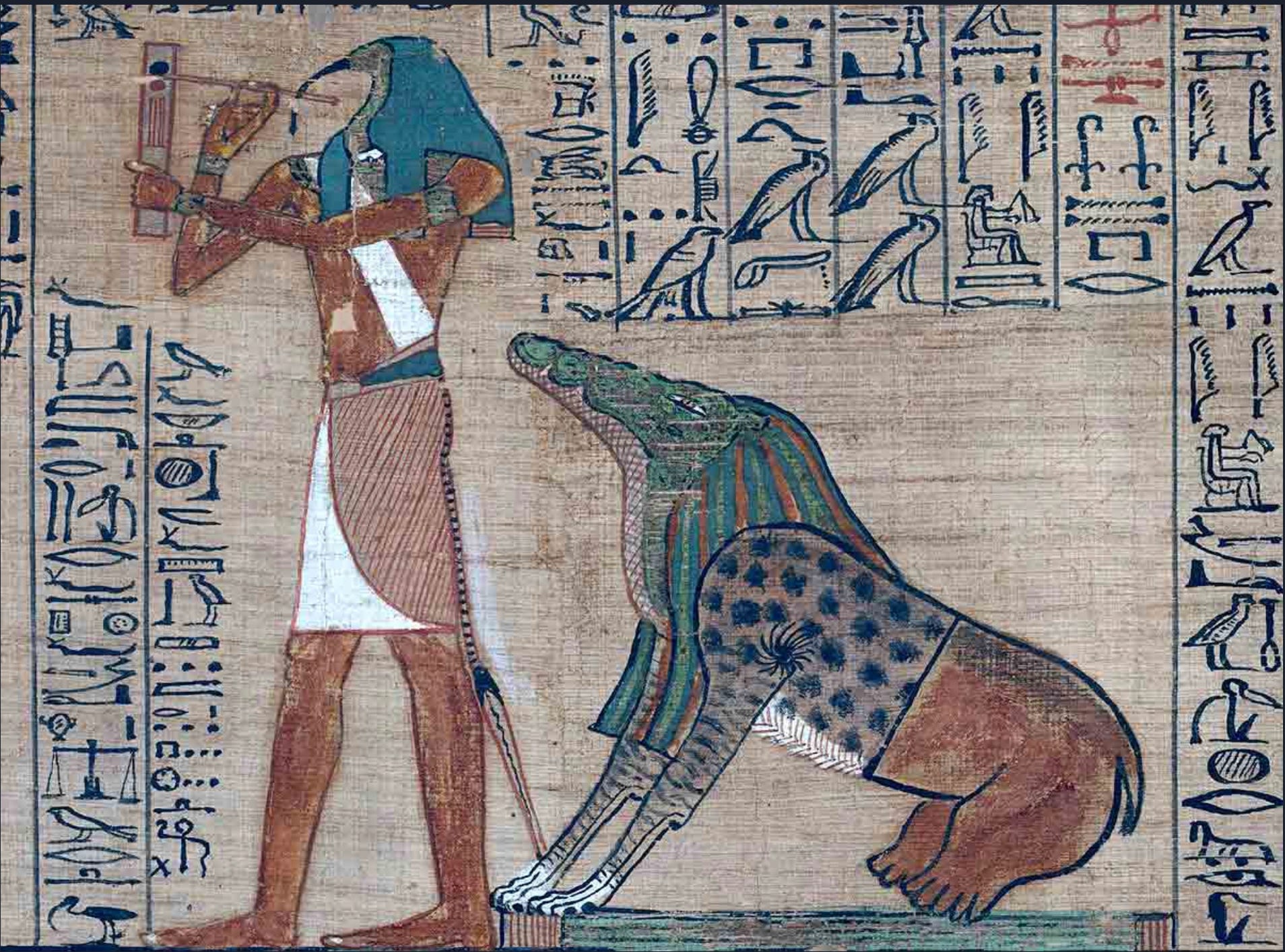
Thoth and Ammit in the Book of the Dead, Ani’s Judgment, 1250 BCE (19th Dynasty). Source: British Museum, London. This axiom As above, so below is the heartbeat of Hermeticism, attributed to Thoth, the ibis-headed god of wisdom, writing, and magic. But in esoteric tradition, Thoth was no mere deity. He was an Atlantean survivor, a high initiate who fled the sinking continent, bearing the Emerald Tablet a crystalline slab inscribed with the laws of creation to Egypt(Khem), where he founded civilization anew.
Keep reading with a 7-day free trial
Subscribe to Sensory Cafe♨️ to keep reading this post and get 7 days of free access to the full post archives.