
DEEP ORIGIN
From Early Consciousness to Civilizational Identity in the Nigerian Region

INTRODUCTION
To understand the fractures and possibilities within modern Nigeria, we must begin far earlier than 1914, far earlier than empires or organized religions. We must return to the first imprints of human presence on this land.
These imprints stretch back tens of thousands of years and reveal not a fragmented beginning, but a long continuum of adaptation, meaning-making, social organization and cultural accumulation. Nigeria is not a recent invention onto which diverse peoples were suddenly imposed. It is the latest chapter in a deep chronological story one that belongs to all who inhabit it today.
The Deep Human Origin
There is strong scientific agreement that:
Africa is the cradle of modern humans
Early Homo sapiens emerged in regions such as the Great Rift Valley approximately 300,000–200,000 years ago
From these regions, human populations spread gradually across the continent in multiple waves through migration, adaptation and local innovation, rather than any single linear movement.

Some interpretive traditions, including readings of the Book of Genesis, symbolically situate the origin of conscious humanity in a comparable geographical zone (often associated with East Africa or the broader Near East). While these accounts differ in method and intent, they converge on a profound point:
The earliest humans developed not only physical survival strategies, but also the capacity for language, symbolism and reflection on existence itself.
Archaeological evidence supports this. Across Africa, early Homo sapiens demonstrate:
Symbolic behavior (such as ochre use)
Structured tool-making traditions
Burial practices suggesting awareness beyond immediate survival
While we cannot definitively prove when “spirituality” began, it is reasonable to propose that:
The roots of metaphysical awareness questions of life, death and order emerged alongside human consciousness itself.
The Klasies Paradigm and Deep Cultural Continuity
One of the most important insights into early human behavior comes from:
Klasies River Mouth
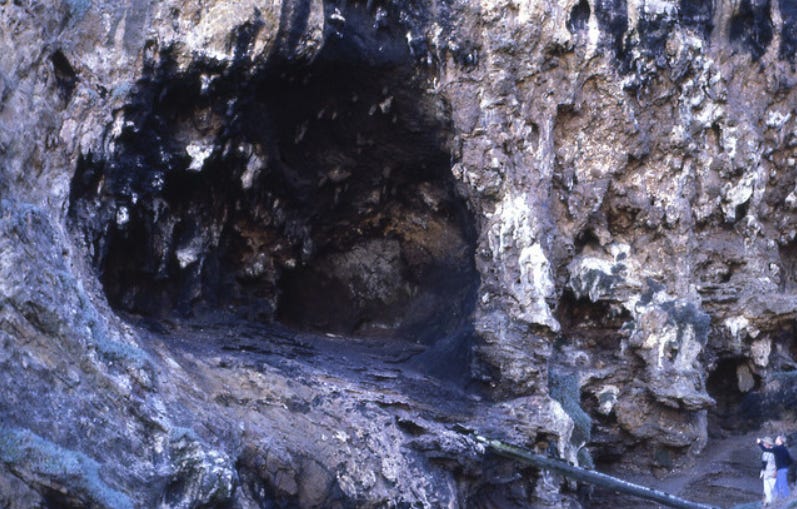
Dated to roughly 125,000–55,000 years ago, this site reveals:
Long-term human occupation
Stable lithic (stone tool) technologies over tens of thousands of years
Evidence of controlled fire use and coastal resource exploitation
Early symbolic practices
What is most striking is not rapid innovation but continuity.
For up to ~80,000 years, human populations maintained relatively consistent lifeways, adapting gradually rather than undergoing constant technological upheaval. This “Klasies paradigm” challenges modern assumptions of linear progress and instead highlights:
A deep human capacity for stability, endurance and cultural transmission across vast timescales.
Early Human Presence in the Nigerian Region
This pattern of long-term occupation and continuity is not confined to southern Africa. Evidence suggests that what is now Nigeria was inhabited far earlier than commonly assumed.
On the Jos Plateau and surrounding regions, sites such as:
Mai Idon Toro
Pingell
Areas near Nok
have yielded Acheulean and Middle Stone Age tools hand-axes, cleavers and picks, associated with repeated occupation. While precise dating remains under ongoing scholarly refinement, some interpretations suggest human presence in these areas extending back tens of thousands of years (and potentially beyond ~60,000 years).
In southeastern Nigeria, the site at:
Ugwuele (in present-day Abia State)
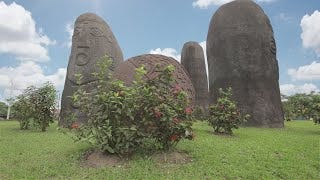
represents one of the largest known lithic production centers in West Africa. It provides evidence that humans inhabited the region as far back as 250,000 years ago The scale of tool manufacture indicates not transient movement, but sustained engagement with the landscape over long periods, though exact chronologies remain debated.
In southwestern Nigeria, the rock shelter at:
Iho Eleru (Ondo State)
has produced one of the oldest directly dated human remains in West Africa, associated with the terminal Pleistocene to early Holocene (~16,000–12,000 years ago). This site provides a crucial bridge between deep prehistory and later environmental transitions.
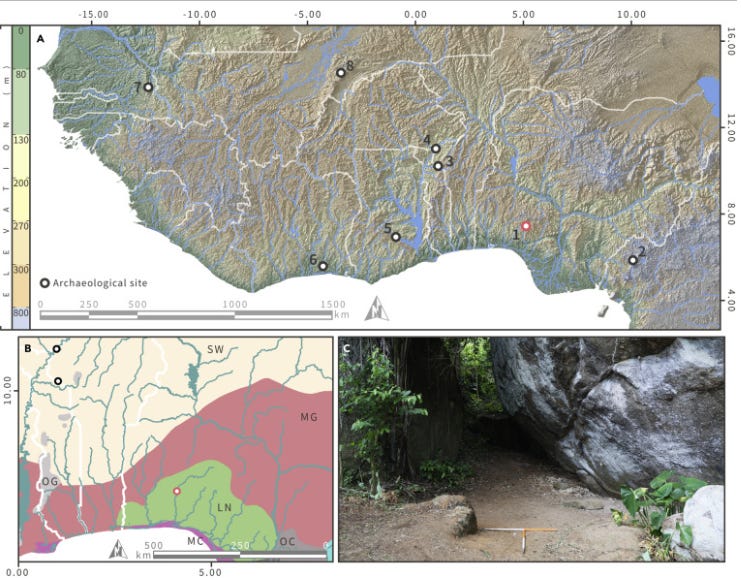
Taken together, these findings suggest:
The Nigerian region was not peripheral to early human development, it was part of a continuous network of habitation, adaptation and cultural expression across deep time.
Climate Disruption and Cultural Memory
Human history did not unfold under stable conditions alone.
One major climatic episode:
Younger Dryas (~12,900–11,700 years ago)
brought sudden cooling, ecological stress and shifts in habitability across many regions.
This period was followed by rapid warming and rising sea levels associated with meltwater pulses. In West Africa, these changes influenced:
Vegetation patterns
Water systems
Human settlement strategies
While geology does not support a single global flood event corresponding exactly to the Biblical account, many regions experienced significant flooding and environmental disruption.
Narratives such as those found in the Book of Genesis, including the story of Noah may be understood, in part, as cultural memories of real environmental upheavals, expressed through symbolic and theological language.
Keep reading with a 7-day free trial
Subscribe to Easy Weezy to keep reading this post and get 7 days of free access to the full post archives.