
MIRACLES
Between Belief, Biology and the Structure of Reality

On Miracles
(A Companion Piece in the Voice of Khalil Gibran) - Dedicated to Khalil Gibran
And a seeker said, “Speak to us of miracles.”
And he answered:
You ask for wonders
as though they were strangers to your days,
yet you are sustained by them.
You call a thing a miracle
when it startles your understanding,
but not when it gives you life.
Is it less a wonder
that a child is formed in silence,
than that sickness departs in a moment?
You say, “Show us the unseen.”
And I say:
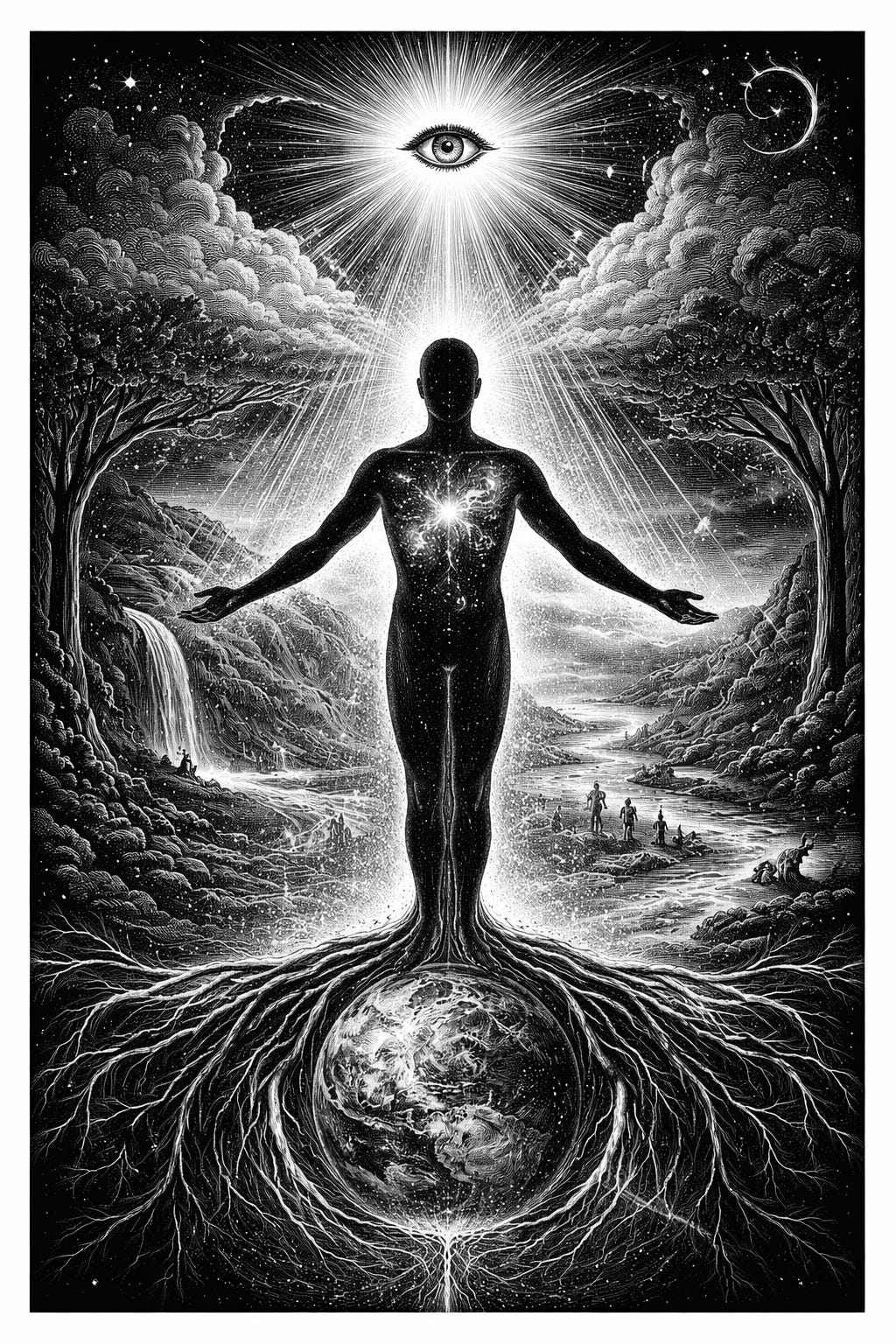
You are the unseen made visible.
For what you are
was once without form,
and without name.
There are those who say
the world is only what can be measured,
and those who say
it is only what can be believed.
But truth walks between them,
unclaimed by either.
For your thoughts are not idle things.
They are seeds cast into the field of your being.
And your body listens
more deeply than your ears.
When you despair,
you speak endings into your bones.
And when you hope,
you whisper beginnings into your blood.
You ask of healing
as though it were the making of what was not.
But often it is the remembering
of what has always been.
For life is not divided as you suppose.
What you call yours
has never been wholly separate from the whole.
And the force that formed you in silence
does not abandon you in your breaking.
You ask if the soul is lost in death.
Tell me:
Does the river perish
when it meets the sea?
Or does it become
what it has always sought?
So too with life.
It gathers, it forms, it returns
not lost, but changed.
And you ask of miracles.
Know this:
They are not against the world,
but the flowering of it.
When your sight is divided,
you call things impossible.
When your sight is softened,
you call them rare.
And when your sight is clear,
you no longer name them at all.
For the miraculous is not
what defies the order of life
but what reveals
how little of that order
you yet understand.
INTRODUCTION: Rethinking the Impossible
Miracles are often framed as a choice: believe in them or reject them.
In the Bible and the Qur’an, miracles are presented as signs, moments that reveal a deeper order beneath ordinary experience. To many modern thinkers, however, miracles are either misunderstood natural events or psychological phenomena dressed in spiritual language.
This tension raises a deeper question:
Are miracles violations of reality or indications that our understanding of reality is incomplete?
Three Types of Miracles
Clarity begins with definition. The term “miracle” is often used too broadly. We can distinguish three categories:
Psychological Miracles
Changes driven by belief and perception such as placebo effects or sudden shifts in behavior.
Keep reading with a 7-day free trial
Subscribe to Easy Weezy to keep reading this post and get 7 days of free access to the full post archives.